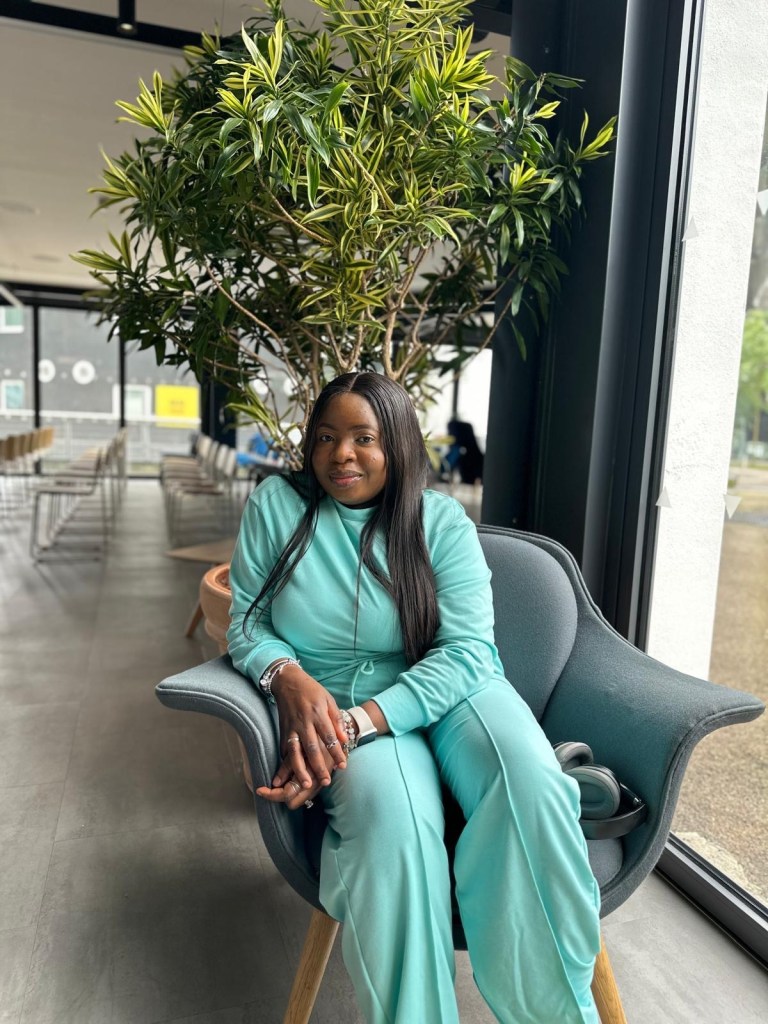
On a very hot summer day in 2025, I sat in Tosin’s living room as we talked, surrounded by the quiet rhythms of everyday family life. Tosin is a wife and a mum, warm and thoughtful. She holds a master’s degree and works professionally, and our conversation felt less like an interview and more like two people simply sharing stories. We spoke about her childhood, her faith, and the path that led her from growing up Muslim to becoming a Christian. It was an honest, reflective conversation—one that went beyond religion and touched on family, unity, love, and what it truly means to know God for yourself. What follows is not just a story of religious conversion, but a thoughtful reflection on family, unity, love, and a personal journey toward knowing God for oneself.
Tosin grew up in a polygamous household, where her father had two wives. Her upbringing was shaped by a Muslim home environment, though she describes her father as not being particularly strict or deeply religious. All the children—siblings and step‑siblings—were raised together as one family, sharing life, space, and experiences. This sense of togetherness played a significant role in shaping her values around unity, family, and mutual respect.
Growing up as a Muslim strongly influenced her worldview. Islam, she explains, is a disciplined faith that requires structure, commitment, and consistency. The five daily prayers, the early mornings, and the physical acts of worship demand intentionality. For her, this discipline shaped her character and work ethic. It taught her not to be lazy, to be responsible, and to act when action was required. Islam, in that sense, provided a framework for life and accountability.
When reflecting on her understanding of God during her years as a Muslim, she makes a distinction between religion and relationship. She believes it is possible to belong to a religion and still not truly know God. For her, even while practicing Islam, her belief in God was personal. She trusted God, believed in Him sincerely, and did not see her faith as mere religious activity. Her connection to God, she says, went beyond labels.
Her journey into Christianity was not driven by dissatisfaction with Islam or by a dramatic spiritual encounter. Rather, it unfolded gradually through exposure and life circumstances. Growing up, she had Christian friends and neighbours, attended events around churches, and was familiar with Christian practices. However, it was marriage that ultimately led her to formally become a Christian. Unity within the family mattered deeply to her, and she understood the Christian expectation that a husband leads the family spiritually. Motivated by love and a desire for unity, she made the decision to convert.
Although she became a Christian through marriage, her faith journey did not come without questions. She admits that she had doubts—particularly around the Christian doctrine of the Trinity. Concepts such as the Father, the Son, and the Holy Spirit raised questions in her mind. She wondered why Christians prayed in Jesus’ name and why God could not simply be addressed directly. While these questions did not cause her to struggle intensely, they did prompt reflection.
Over time, she came to accept that every religion has its own structure, beliefs, and foundational truths. Christianity, she understood, centres on the belief that Jesus died for humanity’s sins and that faith in Him brings eternal life. As she accepted this framework, her mindset gradually shifted. Today, she believes that accepting Jesus is essential to Christianity.
Interestingly, her conversion did not result in conflict within her family or community. Her parents valued good character above religious labels and believed strongly in supporting their children’s choices. As a result, her decision was met with acceptance rather than resistance. Out of seven siblings, four are now Christians while three remain Muslims, and peace has been maintained within the family.
Since becoming a Christian, her understanding of how to relate to God has deepened. She now believes that communication with God is rooted in Scripture. Prayer, she explains, is not merely asking God for things, but standing on His Word—reminding God of His promises as written in the Bible. However, she also acknowledges that this requires knowledge of Scripture. She sees herself currently in a learning stage, growing in her understanding of the Word so she can pray with greater confidence and depth.
Her exposure to the Bible did not begin with her conversion. As a child, she attended a Christian primary school where small New Testament Bibles were distributed. At the time, she read casually rather than with deep understanding, but those early encounters planted seeds that would later become meaningful.
When asked whether becoming a Christian changed her view of God’s love, she reflects carefully. She believes that both Islam and Christianity teach that God is loving and peaceful. In her view, the major point of difference lies in the belief about Jesus’ death and resurrection. Beyond that, she sees many similarities, particularly when faith is practiced sincerely and without extremism. She emphasizes that misunderstandings and harmful behaviours exist in all religions when teachings are taken out of context.
One misconception she carried in her younger years was the idea that Christianity lacked discipline. She once believed that Christians simply went to church to sing and dance, while Muslims were more committed due to structured prayer. With maturity, she now understands that Christianity also demands depth, prayer, and personal relationship with God.
She also highlights a challenge she has observed within Christianity: differing interpretations of Scripture. Some Bible passages can appear contradictory when read without context, especially when individual verses are isolated. She believes this makes personal study, prayer, and the use of study tools essential. Understanding Scripture, she says, requires patience, humility, and reliance on the Holy Spirit.
For anyone questioning their faith—whether Muslim, Christian, or otherwise—her advice is clear. First, know God for yourself. Second, know the Bible, because it is a believer’s strongest weapon. Third, do not build your faith solely around a pastor or church. Churches and leaders may change, but a personal relationship with God provides stability and direction.
In her final reflections, she emphasizes the importance of knowing God in a broken and complex world. Life, she believes, cannot be navigated successfully without God’s help. Regardless of religious background, she encourages everyone to seek God personally, build a relationship with Him, and communicate with Him regularly.
When asked what people should most understand about her journey, she clarifies that her conversion was not forced. It was a conscious decision rooted in love, unity, and personal reflection. She evaluated the cost, accepted the choice willingly, and committed herself fully. Above all, her journey is about serving God sincerely and knowing Him personally—beyond labels, backgrounds, or traditions.
As I left Tosin’s house I reflected on my conversation with her, one thing stayed with me: not every conversion is dramatic. Not every faith journey comes with a defining moment or a sudden turning point. Sometimes, God is at work quietly—through family, through love, through everyday decisions that may not look spiritual on the surface but are deeply rooted in sincerity. Tosin’s story is a reminder that God is still working, even in the ordinary, even in the gradual, even when the journey doesn’t look the way we expect it to.





 Called to Priesthood
Leave a comment